Restroom Trailer vs Porta Potty: An Operator's Honest Comparison
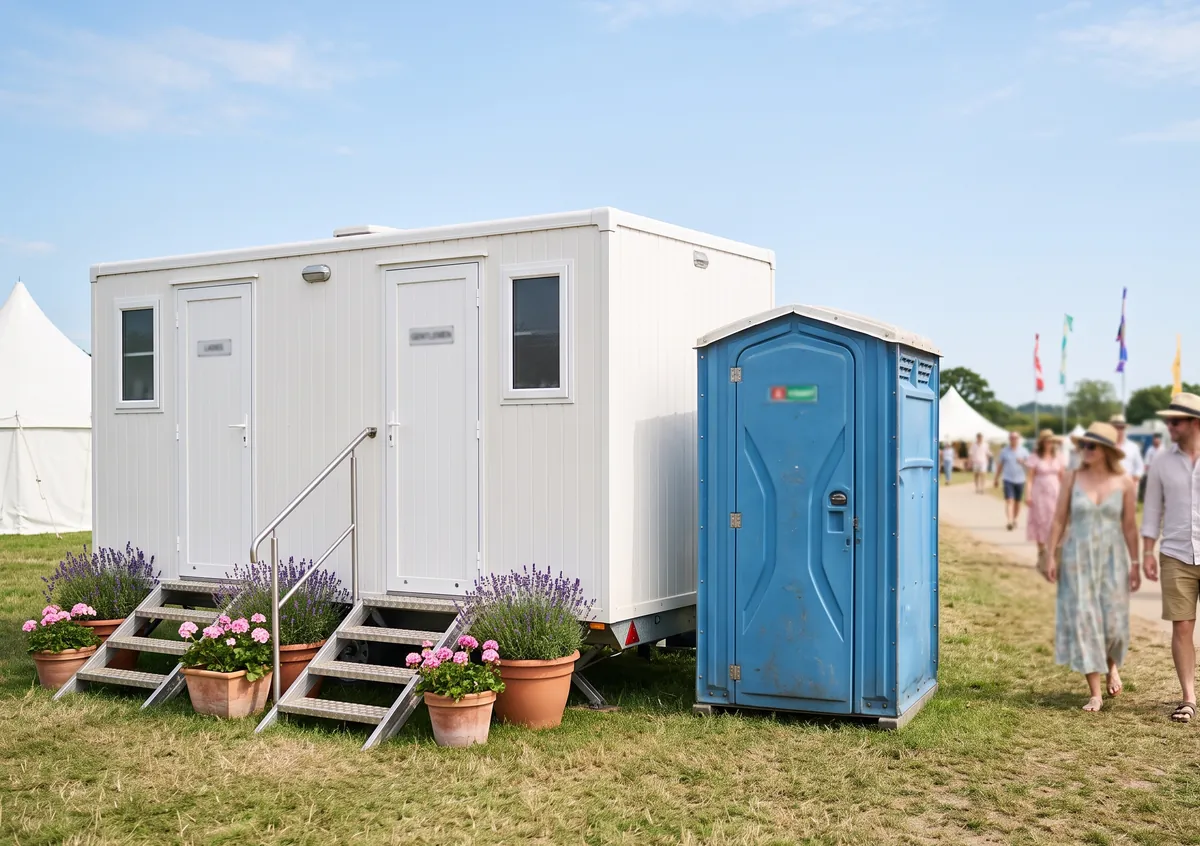
Restroom trailer vs porta potty: a restroom trailer offers running water, flushing toilets, climate control, real lighting, and a far better guest experience, while a porta potty is cheaper, simpler, and needs no hookups. The trailer is worth the higher cost for weddings, long events, hot or cold weather, and upscale crowds. A clean, well-serviced porta potty bank is the smarter buy for short, casual, budget-minded events.
I rent both. That is the part hosts do not always realize when they call me. I keep porta potties in my fleet right alongside the luxury trailers, because the right answer changes with the event. Over eleven years I have learned that the worst outcome is not picking the cheaper option, it is picking the wrong one for the day. So let me put them side by side, honestly, including why the trailer costs what it does.
The Core Difference
A porta potty is a self-contained plastic unit with a holding tank, a toilet, and usually a small hand-sanitizer dispenser. No plumbing, no power, nothing to hook up. Drop it, service it, pick it up.
A restroom trailer is a towable structure built like an actual bathroom: flushing toilets, sinks with running water, mirrors, lighting, flooring, often air conditioning and heat. It needs power and water, either from your site or from a generator and tanks I bring.
That difference drives everything else.
Side by Side
| Factor | Porta potty | Restroom trailer |
|---|---|---|
| Typical cost (1 day) | $125 to $250 per unit | $850 to $9,000+ |
| Running water | No (hand sanitizer only) | Yes, real sinks |
| Flushing toilet | No | Yes |
| Climate control | No | AC and heat available |
| Lighting | Minimal or none | Full interior lighting |
| Hookups needed | None | Power and water (or generator/tanks) |
| Capacity per stall | Lower (no flush) | Higher, comfortable |
| ADA option | Single accessible unit | Dedicated ADA suite |
| Guest experience | Functional | Comfortable, upscale |
| Setup complexity | Drop and go | Leveling, hookups, setup |
Experience: This Is the Real Gap
The number one reason hosts choose a trailer is how it feels to walk into. A porta potty is a small, warm, plastic space. It works, but nobody lingers. A restroom trailer feels like the bathroom at a nice restaurant: you step up into it, the floor is solid, there is light and a mirror, the sink has running water, and in summer the AC hits you. For a wedding, that contrast is the whole point. Guests notice, and they tell the host.
For a construction crew at 7 a.m., that experience gap matters a lot less. The crew needs a clean, working toilet near the work, and a porta potty delivers that all day.
Cost: Why the Trailer Costs More
I am not going to pretend a trailer is cheap. A porta potty might be $150 for the day. A comparable-capacity trailer is several times that, and a luxury unit with an attendant can be ten to forty times that. Here is where that money actually goes:
- The trailer itself costs an operator $90,000 to $200,000 to buy, versus a few hundred to a couple thousand for a porta potty.
- It needs a heavy truck to tow, a generator and water tanks if your site has no hookups, and more labor to set up, service, and clean.
- Insurance, storage, and maintenance are all higher.
So the price is not a markup on a plastic box. It is renting an entire small operation for your event. I break the full pricing down in restroom trailer rental cost.
Capacity
People assume more stalls always equals more capacity, but flush matters too. A porta potty with no flush and a fixed tank fills and gets less pleasant as the day goes on, which effectively lowers its real capacity for a long event. A trailer with flushing toilets, larger tanks, and on-site servicing keeps each stall usable and comfortable for far longer. For a quick two-hour event the difference is small. For a ten-hour wedding it is large. My guide on how to size a restroom trailer covers how guest count and event length set the stall count for either option.
Hookups
This is a practical deciding factor people forget. A porta potty needs nothing. You can put it in the middle of a bare field and it works.
A trailer needs power and water. If your venue has a standard outlet and a hose bib nearby, easy. If it does not, I bring a generator and fresh-water tanks, which adds cost and means someone has to manage fuel and water levels through the day. Power and water genuinely make or break a trailer rental. An undersized generator or an empty water tank turns a luxury trailer into an expensive, non-working one. So when you compare quotes, factor in whether your site can actually support a trailer.
Climate Control
In mild weather this barely matters. In a 95-degree July afternoon or a 35-degree October evening, it matters enormously. A porta potty has no AC or heat: it is as hot or cold inside as outside, often worse in direct sun. A trailer holds a comfortable temperature, which keeps guests happy and keeps them at your event longer. If your date falls in a hard-weather season, climate control alone can justify the trailer.
ADA Access
Both can offer accessibility, but differently. There are single ADA-compliant porta potty units with more floor space and grab bars. A luxury trailer can include a dedicated ADA suite with a ramp, wide door, grab bars, and room for a companion. For formal events or any public event with accessibility requirements under the ADA, the trailer's dedicated suite is usually the stronger, more dignified option. If you have guests with mobility needs, do not let either get skipped.
Event Fit: My Quick Rule
Choose a porta potty bank when the event is short, casual, modest in size, weather is mild, and budget is the priority. A clean, freshly serviced porta potty is genuinely fine, and the only ones people complain about are the ones nobody serviced.
Choose a restroom trailer when it is a wedding or upscale event, runs long, faces extreme heat or cold, needs strong ADA access, or when guest experience is part of what you are paying for. For more on that threshold, read do I need a restroom trailer.
Either way, a couple of standalone freestanding handwash stations placed near the units improve hygiene and ease congestion, especially with a porta bank where on-board handwashing is limited.
Servicing: The Thing Both Get Wrong
Here is what eleven years taught me: the complaint is almost never the type of unit, it is the servicing. A porta potty that gets pumped and restocked on schedule is a clean, functional restroom. A porta potty nobody touches for a busy ten-hour day is the horror story people picture. The same is true of a trailer. A trailer with a full waste tank and an empty water tank is worse than a porta potty, because guests expect more from it.
So when you compare the two, do not just compare the units, compare the service plan behind them. Ask any operator:
- How often will you service the unit during my event?
- For a long event, will you come back mid-day?
- Is an attendant available?
A serviced porta bank beats a neglected trailer every time. The unit type sets the ceiling on experience, but servicing decides whether you reach it. I dig into red flags around servicing in how to choose a restroom trailer rental.
A Quick Cost-Per-Guest Way to Think About It
One simple lens that helps hosts decide: divide the rental cost by your guest count. A $200 porta bank for 100 guests is two dollars a head. A $2,000 trailer for the same 100 guests is twenty dollars a head. For a casual afternoon, two dollars a head is plenty to spend on restrooms. For a wedding where the average plate of food costs far more than that, twenty dollars a head to keep guests comfortable all night is easy to justify. Run that number against what you are spending per guest on everything else, and the right call usually becomes obvious.
An Honest Story
I once had a host insist on a porta bank for a 200-person August wedding to save money. I delivered clean, freshly serviced units and a handwash stand, and I was upfront that the afternoon heat would be a problem. By the time the toasts started, guests were avoiding the units and the bride was unhappy. The next year her sister booked the same venue and went straight to a five-stall trailer with AC. Same family, same venue, two very different nights. The cheaper option was not the cheaper outcome.
That said, the very same week I serviced a porta bank at a 12-hour highway road crew job, and a trailer there would have been a waste. Right tool, right job.
Frequently Asked Questions
What is the main difference between a restroom trailer and a porta potty?
A restroom trailer is a towable structure built like a real bathroom with flushing toilets, sinks with running water, lighting, and often air conditioning and heat, but it needs power and water. A porta potty is a self-contained plastic unit with a holding tank and a hand-sanitizer dispenser that needs no hookups at all. That single difference drives cost, capacity, and guest experience.
Is a restroom trailer worth the extra cost over a porta potty?
For a wedding, a long event, hard weather, or an upscale crowd, yes. The trailer wins on experience, comfort, climate control, and real capacity for a long day, and it costs more for genuine reasons. For a short, casual, mild-weather gathering on a budget, a clean, well-serviced porta potty bank is the smarter buy.
How much cheaper is a porta potty than a restroom trailer?
A porta potty typically runs $125 to $250 per unit for the day, while a restroom trailer runs $850 to $9,000 or more depending on size and attendant. A simple way to weigh it is cost per guest: a $200 porta bank for 100 guests is two dollars a head, while a $2,000 trailer is twenty dollars a head.
Do I need power and water for a restroom trailer?
Yes. A trailer needs power and water, either from a standard outlet and hose bib at your venue or from a generator and fresh-water tanks the operator brings. A porta potty needs nothing and works in the middle of a bare field, so your site conditions can decide the question on their own.
Which is better in extreme heat or cold?
The trailer, clearly. A porta potty has no AC or heat, so a 95-degree July afternoon makes it miserable inside and guests will avoid it, while a heated trailer in cold weather keeps guests from leaving early. In mild weather the gap barely matters, but in a hard-weather season climate control alone can justify the trailer.
Can a porta potty be ADA accessible?
Yes, there are single ADA-compliant porta potty units with more floor space and grab bars, but a luxury trailer can include a dedicated ADA suite with a ramp, wide door, and room for a companion. For any public event, accessibility is often legally required under the ADA, and the trailer's dedicated suite is usually the more dignified option.
What is the most common complaint about either option?
Almost never the type of unit, it is the servicing. A porta potty pumped and restocked on schedule is a clean, functional restroom, while one nobody touches for a busy ten-hour day is the horror story people picture. A serviced porta bank beats a neglected trailer every time, so compare the service plan, not just the units.
My Honest Take
Restroom trailer versus porta potty is not about which is better in the abstract. It is about which fits your event. The trailer wins on experience, comfort, climate, and capacity for long upscale events, and it costs more for real reasons. The porta potty wins on price and simplicity for short, casual, mild-weather gatherings, and a clean one is nothing to apologize for.
Decide based on your guest count, event length, weather, formality, and site hookups, then compare real operators on our pros directory. When you are choosing one, how to choose a restroom trailer rental tells you what to verify before you sign. Operators can get listed here.